Sunday, May 31, 2015

Humor Extraordinaire

I met an ordinary person with an extraordinary sense of humor a few years back at a writing conference.  At an impromptu post-conference time, Mark shared his writings and had a group of writers chuckling over his madcap paraphrasing of Eve’s experience in the Garden of Eden. I truly hope he publishes it someday. A divorced dad, former youth pastor and current writer and tech dude, Mark Brady is someone whose twinkling eyes can take in the ordinary and give back so much more.

Welcome Mark, fellow Word Weaver! 

Q) So I have to ask, upfront, about your sense of humor. How did it develop - when you were growing up, as a teen, perhaps as an adult?
A) My sense of humor comes from my family, mainly on my dad's side.  I quickly learned that being funny helped in a lot of situations.  I do enjoy trying to make someone laugh or at least smile, because this is a very dark world we live in and a little laughter can go a long way to make it brighter. 

Q) I’ve always wondered if humor has a hereditary as well as environmental component in people. Who in your family is the most like you in this way?
A) My mother says I am just like my father, so I would have to say I got most of it from him.

Q) Speaking of family, you had the privilege of giving one your children in marriage this year. I wondered if your sense of humor eased the wedding stress that sometimes happens?
A) My daughter is having a traditional "church" wedding next January.  To save money on the medical and dental needs of my new son-in-law, the kids decided to get married at a Justice of the Peace, so my daughter could put him on her insurance plan at work now.  They got married on April 1st.  When I arrived in town, I sternly warned her that this had better not be an April fool's joke.  Everyone laughed so, yes, I guess that set the tone for the event.

Q) If you could only share one piece of parenting advice, what would you choose to say?
A) Accept your children no matter who they choose to be or where they are in their walk with God, and make sure they know you accept them.

Q) How did the transition from youth pastor to technology businessman happen?
A) Sin.  Isn’t it always sin that causes one to have to leave the garden God has for them?  It was not a pretty scene, but a lot has come out of that time for good. 
Only God can take what the devil intends for harm and make something good out of it.  So after having to leave the ministry I started drafting in an architectural office.  It wasn’t long before I learned AutoCad and that lead to me liking the computer side of things more than the architectural world.  I left drafting and of all things went to work as a computer main frame operator at a publishing company.  It was there I saw and gained an understanding of the publishing industry.  That job leads me to where I am currently working which is AT&T.  My desire now is go back into full time ministry as a writer and motivational speaker.  It’s funny how God can take a damaged person and straighten them up, dust them off, and put them on a new path for His purposes.  I now can freely write about deception, the perils of power, and a leader falling, because I have been there.

Q) So how did you end up becoming a writer?
A) I have always thought one of the greatest things God gave us by making us in His image is the power to create.  I love the realization that I am taking words and putting them on paper in a particular order that “creates” something that can entertain, help, teach, or heal another person.  I first had to overcome the big question, “Am I a writer?”  Bob Hostetler, our nightly speaker at my first writer’s conference, answered that question for me after spending some time with me and reading one of my chapters I had taken to the conference.  He looked directly at me and said, “Mark, you’re a writer.”  I cried, for in that moment I realized God’s word spoken over me after I left the ministry had come true.  The word was God would rebuild me, and now I knew He had.  In the 27 years I wondered in my desert (the time I left the ministry to the writer’s conference) I was healed, I was taught, and I was rebuilt as a new man.

Q) Your blog is read all over the world and so I have to ask you how you think that happened?
A) At last years’ conference I took a couple of classes on “social media”, wanting to build my platform, and I received some really good tips on how to use social media.  After I got home from the conference, I wanted to put what I had just learned into practice.  So I switched my blog to Word Press, and I learned to use it.  One of the things I have done is include “tags” in each blog.  I believe what happens is when someone does an internet search on a particular topic that I have tagged, it leads them to my blog.  I am truly humbled that my simple blog is used by God in places I will, most likely, never set foot.


Q) What was your most extraordinary yet ordinary experience to date?
A) One lady, who I got to know through work, now reads my blog every week.  Perhaps it was, at first, my willingness to go over to her house and help her with a lot of labor intensive jobs after her husband passed away that earned me credibility.  Even in the midst of those tasks, I openly talked about my relationship with God without any condemnation.  I usually will say, “This is how I believe”. 
She wrote me a few weeks ago and told me that due to reading my blog, she has changed her life around and has now rededicated her life to God. And she has returned to the church of her youth. Again, only God!

Q) Lastly, and best of all, what is something about you that is surprising?
A)
I think most people are surprised at my ability to be resourceful, almost a MacGyver kind of gift.  Give me a problem and I will have it resolved in 30 minutes or less, or the next one's free.

What surprises me the most is how much the God of the universe delights in using us to work with Him in building His kingdom.  Doing so is truly my pleasure, and all the glory goes to Him.

Friday, May 8, 2015

Outside Extraordinary


There are people you meet along your journey that make you appreciate the ordinary yet amazing things of life. The person I’d like to introduce you to is one of these, outside the extraordinary. I first met Matthew Pechanio at a family baptism when the grandchildren were born. Besides being a runner and craft beer maker, he is the pastor of Ascension Anglican Church in the Chicago land area. As I’ve pondered his wonderful impact on my grandkids as their pastor, I thought I’d invite him to share more of his life and his calling with us.

Welcome, Matthew!

Q ) Your genuine friendliness really impacted me when I first met you over five years ago.  What is your back story?
A )  I like people (most of the time).  Being friendly and taking an interest in others shows love in our culture.  Most people I interact with don’t need money, or food or any kind of material help. They don’t need to learn to read, or some other skill that is necessary for survival.  But people need to be heard, need to feel like they matter and then other people care.  So I do that, because it is the primary way I can fulfill the Golden Rule.
            Also, I did not grow up in a home where this was present.  Rather than continue the pattern of isolation and indifference that I experienced growing up I decided in my late teens and early 20s to be different, to take an interest and develop meaningful relationships. Others in my family did not, and to this day they live an isolated and indifferent kind of life.  Sometimes our backgrounds solidify who we are, but other times they propel us to live differently.
            I grew up in a quiet home in Elmhurst, with parents who provided for every material need and instilled in me faith in God and a commitment to learning and morality.  In college and beyond I began to explore a wider world, and press into an even deeper Christian faith.   Pressing into people’s lives became the vehicle to serve God.

Q) When did you start running?
A)  About 7 years ago, in my late 30’s.  I never liked running and used to say that I would only run if I were being chased.  But one day sweet Kris (wife of 20+ years) was running on a treadmill and I wanted to talk with her, so I decided I could run on an adjacent treadmill to have a conversation.  I managed a mile in 12 minutes.  Having survived this I attempted it again the next day and gradually added mileage while reducing my time.  And by the spring of the next year after 6 months of running I finished my first 10k race. Four months later it was a half marathon.  I love running and have been in 4 marathons (probably done with those) and find it to be a peaceful and healthful practice.

Q) What are some of your other interests and hobbies?
A)  Brewing beer (see below), reading and listening to Yes.  I read a variety of things, mostly non-fiction, and usually have multiple books going at one time.  I enjoy theology and religious studies as well as literature dealing with current events and contemporary trends and ideas.  History and social studies are also popular with me.  I also love backpacking, hiking, camping and riding my bike.  Being in nature and with animals (especially greyhounds) are essential components of who I am as a person. 

Q) How did you end up making your own craft beer?
A)  About 10 years ago a friend of mine was trying to unload his equipment.  I thought I could give it a try, especially since the set-up was free!  My wife said that I’ll never be able to do it and that this hobby wouldn’t last.  Well, 100+ batches of home brew later, she may be right – but I wouldn’t count on it!

Q) How did you and your lovely wife Kris meet?
A)  We met in the fall of 1991 in college, at NIU in DeKalb.  We were both part of a campus ministry and became friends before starting to date in late spring of 1992. We married in October of 1994.

Q) Did you decide to become a pastor before or after you were married?
A)  Long after.  I had a strong inclination in college to work in Christian ministry, but it wasn’t until after several years of marriage and some experiences in the ministry, and some very solid and fruitful years teaching high school Bible and religious education classes that I made a transition to pastoral work. That transition occurred between 2003 and 2007.

Q) At what point did you know you would be part of the Anglican denomination?
A)  In the late 90’s I became very disappointed with our church experience in that I was longing for a more intellectual faith, and one that was connected to the wider church, the ancient church and the sacramental church.  Returning to the Catholic church of my youth didn’t seem to be the right fit, but coming across contemporary Anglicanism (which emphasized “three streams” of expression:  the evangelical, the catholic, and the charismatic) was a Godsend.  The Anglican Church was a wonderful bridge between the Catholicism of my youth and the evangelicalism I had experienced in my 20s. 

Q) The pivot points we experience in life don’t often come up. Would you mind sharing one pivot point in your life where you knew everything would be radically different had you chosen differently?
A)  In 2003 I took a backpacking trip to the mountains of central Oregon.  It was pivotal in that it set me on a course to experience the outdoors and embrace my embodied-ness as a being who is a part of a wider world.  Not only did I develop a love of nature and being outdoors in it, this opened up a whole new set of practices that flow from my understanding of the work of creation and our role within it.  For example, my enjoyment of the outdoors led me to learn more about the environment, take up causes and issues that help to protect it (including vegetarianism) and develop activities and rhythms that keep me rooted and in touch with the natural world. 


Wednesday, April 1, 2015

March 31/April 1st Extra Ordinary Blog - no joke!

As winter melts into spring this month, I’d love to share the extra-ordinary adventures of a fellow library worker. Her photos from the mission trip she took to Haiti inspire me to keep writing my novel based in the sea. Her creativity in working with local teens motivates me in my own endeavors with the wee ones of the library.

Welcome, Lauren Hilty!

Q) You seem to love working with teenagers, what with being an advisor for your youth group and holding a full-time job as teen librarian. It’s a tricky age, 13-19. What made you want to work with that age group?
A)  I was very active in my church's youth group when I was in high school.  The best parts of it for me were the close relationships I had with my fellow peers, and also with our adult advisors.  I remember thinking it was so cool that grown-ups who were not related to me and not from school wanted to spend time with us, with me.  The care and love I felt was incalculable, and it was my first taste at what it was to feel a part of something bigger than myself, a part of a community of like-minded individuals and I wanted to give back by becoming an advisor myself.
       The tricky part of this age group, is you feel both alive with discovery and utterly alone.  I remember how confusing of a time it was and I also remember how significant it was to have a non-parent, non-teacher adult to turn to during the low points.  My role as an advisor and a librarian puts me in a unique position to help.  Also, it allows me to be as goofy as I want and to wear blue nail polish to work.

Q) What was your groups’ purpose on this mission trip?
A)  The trip was a scouting trip.  Our church has partnered with an experimental school in Cité Soleil, one of the country's most dangerous and impoverished slums.  The Cité Soleil Community School is the only free school in the city.  Two hundred lucky children are given a safe haven a couple hours a day and nourishment for their hungry stomachs and minds.  This school will give them the knowledge and skills they will need to not only survive but also thrive.

Q) What was it like being a youth leader on a mission trip to storm ravaged Haiti?
A)  For the first time in years, I was actually the youngest person on this particular mission trip.  Because it was only a scouting trip, I was one of six individuals selected to go and help foster relationships with other volunteer organizations, the staff of the school, and more importantly: the kids.  While we did not bring any youth with us, they were constantly on my mind.

Q) What was the highest and lowest point you experienced on this trip?
A)  The highest and lowest point of my trip were both one in the same.  Escorted by Julie, a fellow American volunteer, and three very large Haitian security guards, we set off on our tour of the streets of Cité Soleil.  We were led past homes made of cinder blocks and tin sheets patched up with old scraps of wood or tarps.  We were led down alleyways, meeting an assortment of people including the local leather smith making decorative sheaths for giant machetes.  We were led further and further down the twists and turns of the streets, in-between houses and the passageways seemed to be getting narrower and narrower.  Slowly I grew more and more concerned for my safety and as I was about to start hyperventilating a little boy, no older than three, wearing only a pair of ratted Winnie the Pooh overalls, suddenly came running around the corner right up to me and hugged me around the waist.  He looked up at me with these huge beautiful, brown eyes, smiled and simply took my hand.


     That opened up the floodgates.  The floodgates to not only my heart but also to the floodgates holding back a sea of tiny little children barely able to walk, barely clothed, barely inhibited.  The further we walked down those alleys the narrower they got-but this time due to the swarming kids coming to hold our hands and walk with us.  I soon found myself with at least three little hands holding each of my own and quickly realized I was no longer overcome with fear.  Instead I felt overcome with hope and serenity.  And the love I felt was instant.  I wished desperately that I could take all of them home, that I could care for them and clean them and give them safe places to sleep.  But I realized that I could not give them a different life no matter how hard I wished it.  It was then that I understood the true importance of the school, of an education.


Q) Would you ever go back? Why or why not?
A)  Going on this trip and working with those kids had been the single most eye-opening, heart-breaking, incredible trips I’ve ever been on.  All the wonderful children at the school welcomed us with open arms.  There seemed to be no looks of confusion or hostility-which we often met elsewhere.  There was only excitement and curiosity.  They simply wanted to connect with us and were so unafraid and sweet that any inhibition I had quickly melted away -- melted with a warmth that did not come from the sweltering temperatures but from their acceptance and desire to learn.  Would I go back?  In a heartbeat.


Q) How did this trip influence your decision to become a teen librarian?
A)  It was empowering and motivating to see the desire to learn in those children’s eyes.  Before my trip, I had been toying with the idea of getting an MLIS degree.  There’s nothing in the world quite like going to a third world country and realizing exactly what you want.  I wanted to help.  I wanted to make a difference.  I wanted to learn about the accessibility of information and the distribution of resources.
     Despite spending my undergraduate career studying to be a photographer, I felt studying library science was the next step in my search for growth.  I realized that what I loved most about photography was the documentation and preservation of a moment in time.  And that’s exactly what books are -- just with words.  And although I enjoyed the study and practice of photography, working in the art world just wasn’t for me.  And now, I’m working in an environment I am passionate about and get to learn something new every single day.

Q) As a librarian, there are way too many stereotypes about library workers. What are some of the stereotypes you try to bust with the students?
A)  First and foremost, I want the kids to know that I don't know everything.  No one does.  I want them to know that it's okay to not have all the answers all the time but instead to strive to gather as much information as possible in order to make an informed decision.  And also that all I do is read when I go home at night.  While I do make some time for reading, I'm a big fan of binge watching TV shows on Netflix and watching horror movies.

Q) Since you’ve become a full-time teen librarian, you have revolutionized that department, offering so many possibilities to teens: volunTeens, Anime Club, Books 2 Box Office, Teen Book Chat, Video Game Hangout, Poetry Slam, Teen Advisory Group, drop-in activities (the list goes on.) How do you come up with all these ideas?
A)  I get some ideas from fellow YA librarians and (guiltily) some from Pinterest but most of my program ideas come directly from the kids themselves.

Q) Thanks for taking time out of your really busy schedule to share your extraordinary life with us!  One last question - what is one thing about you that no one would suspect, whether it be ordinary or extra?
A)  I have four tattoos.


Thanks, Lauren, for sharing your photos and yourself with us! This wonderful Extra Ordinary blog was posted on April 1st, 2015 from the USA. If you know someone who would like to share his/her Extraordinary Ordinariness, please email me at soulfixer13 at yahoo dot com (RE: EO blog) or leave a comment. www.lookandbe.blogspot.com is a once-a-month blog highlighting the extraordinary adventures of ordinary folks like you and me.

Friday, February 27, 2015

Ordinary Extraordinary


February 28, 2015 
by TLC Nielsen

                  Do not ask your children
                        to strive for extraordinary lives.
                        Such striving may seem admirable,
                        But it is the way of foolishness.
                        Help them instead to find the wonder
                        And the marvel of an ordinary life.
                        Show them the joy of tasting
                        Tomatoes, apples and pears.
                        Show them how to cry
                        When pets and people die.
                        Show them the infinite pleasure
                        In the touch of a hand.
                        And make the ordinary come alive for them.
                        The extraordinary will take care of itself.
William Martin, The Parent’s Tao Te Ching: Ancient Advice for Modern Parents

This quote sits to the right of my computer. It reminds me of the power of the simple things of life.

The power of one person in this adventure called life cannot be easily constrained and stuffed into words on a page. But I’m attempting that at my blog, to share the ordinary extraordinary true stories of folks in my life. It’s in the simple events of life that the importance of the ordinary individual shines through. This month I'd love to share the life of someone who taught me the marvels of ordinary things such as the beauty of seeds under a microscope and the joy of aiding a turtle across the road - botanist Linda W. Curtis.

Photograph by Jim Curtis

I nominated my mother, Linda, this year for Lake County Suburban Life’s Lake County Leaders, people who make a difference behind the scenes in Lake County. She was one of 8 nominees chosen for special recognition by the newspaper. I wrote about my mom in a recent guest blog for the 10 Minute Novelist, Katharine Grubb (www.10minutenovelist.com)  As an original “Ordinary Extra-ordinary” person – mom,  great grandmother,  retired college professor, artist, Kindergarten teacher, photographer and botanist – Linda Curtis is a down-to-earth person I’d love to introduce to you.

My mom worked three jobs to put herself through college, where she met my dad. While a mom of three, she finished her masters degree in botany. Her garden kept our family fed. Her many jobs (sign painter, landlady, part-time college professor) kept us financially afloat. She became a full-time college professor in her 50’s and retired to botanical research, ending up in ditches, bogs and beaches.

Q) You are a well-known botanist - how did you first get interested in plants?
A) When I was small, the Quaker Oats box advertised an offer for iris and lily bulbs for 25 cents. My mother bought them and planted them outside the door of my families log-sided home. I was enamored of the color and design, yellow iris followed by orange lilies. And all around, Scottish bluebells.

Q) Tell us more about your childhood! Where did you grow up and what were you like?
A) I grew up in a wonderful neighborhood, a street of mostly owner-constructed homes with families sharing the same economic problems of World War 2. Victory gardens were necessary and I tended the family garden with my brothers, but also raised strawberries and raspberries like my grandparents who lived next door. I walked miles with my grandfather during the wild berry seasons, Juneberry, strawberry, raspberry, blueberry, blackberry. And harvests from the garden were grand with carrots and potatoes that went into the root cellar with all of Grandmother’s preserves.

What was I like? My grandmother called me “Sunshine”. I would like to think that was a pleasant disposition. I was a good student, walked a mile to school every day, including brutal northern Wisconsin weather.

Q) Where did your love of nature take you through school?
A) Those were the days... when you could pick wildflowers on the side of the road and take them to your smiling teacher. And the bog I walked past to reach our home was full of pink moccasin flowers, hundreds as far as my eyes could see. A bouquet of wildflowers in a vase by my bed meant I woke up to beauty every morning in summer and fall. Then progress came to our northern town and the local dime store sold potted plants. When I was 13, I bought my first plant, a Pothos ivy that I still have today.

In science classes, I may have been the only student to illustrate my assignments. I remember the science teacher liked them. My father was an artist/ painter/musician so I thought everyone drew or painted at night and made your own music. This was before television.  And we had the direct order from my father that sounded like “Thou shalt not use anyone else’s drawing or artwork.” Coloring books were not allowed. In school, teachers scolded me for coloring outside the lines and making blends and textures. My work was seldom on the bulletin board for display as I had poor handwriting.

When the Korean War was over, the GI Bill helped returning soldiers go to college and become teachers. I was one of the lucky benefactors in that they taught what they knew, the math of trajectory and ballistics, and were strong in teaching science. The textbooks of the day improved greatly, so as long as you could read, you’d never be bored. I read my two older brothers textbooks when brought home for homework assignments. I could hardly wait for them to finish. Luckily, flashlights had been invented so kids could read under their blankets at night.

Q) What were your interests outside of botany?
A) The local library was my lifeline. I read the reference books over and over as I could not take them home. I especially enjoyed the volumes on Lepidoptera, butterflies and moths and made a wonderful collection of my own. I now write occasionally for Wisconsin Entomology Society News-letter and send images of insects I find to UF-Gainesville Entomology Department.

Q) What careers have you had outside of being a scientist?
A) The most sacred, as mother of God’s children. Just as I learned our true parent was Father-Mother-God, I knew my children were on loan to me, and I was their caregiver and provider. Later, when they were in college and I couldn’t find enough part-time teaching jobs, I used my free-hand calligraphy skills and began a paper sign business for store windows that helped put the kids through college. Also, I took out a loan as a down payment on a duplex apartment. The kids helped with cleaning and painting, and later, my granddaughters worked for me. What a blessing.

Q) When did you know you wanted to be a teacher?
A) In college, although I started my freshman year in Medical Technology and took general science and courses, I thought it would be enjoyable to teach earth science and biology. I had excellent mentors.

Q) What was the most unique aspect of family life with you being a scientist?
A) Just plain fun! Games and experiments, field trips and camping, the natural world was all around us.

Q) How did you end up publishing your own books?
A) Rejection letters!

Q) You are a speaker as well as a scientist and author. Who in your family was the most like you?
A) All of our children are talented as speakers and writers.

Q) What current projects are you working on?
A) With Bog-Fen Carex, my third book, at the printer I can finish Dunes Carex and Central Florida Carex. I also put my science reports and funny stories on my website, www.curtistothethird.com

Q) What’s in store for you in the future?
A) A brilliant future of endless possibilities, it just gets better.


Saturday, January 31, 2015

Extraordinary Ordinary (blog by TLC)


Welcome to the renewed lookandbe.blogspot.com! As a lot of ordinary folks started sharing their extraordinary stories with me over coffee, at church and in life this year, I knew I needed to find a way to share these adventures with others. I’m so glad God had me take the time to look and be with those around me, hearing about the extraordinary ordinary. Thanks for taking the time to read this month's amazing story. On the last day of each month, I'll have another ordinary person's journey to share!

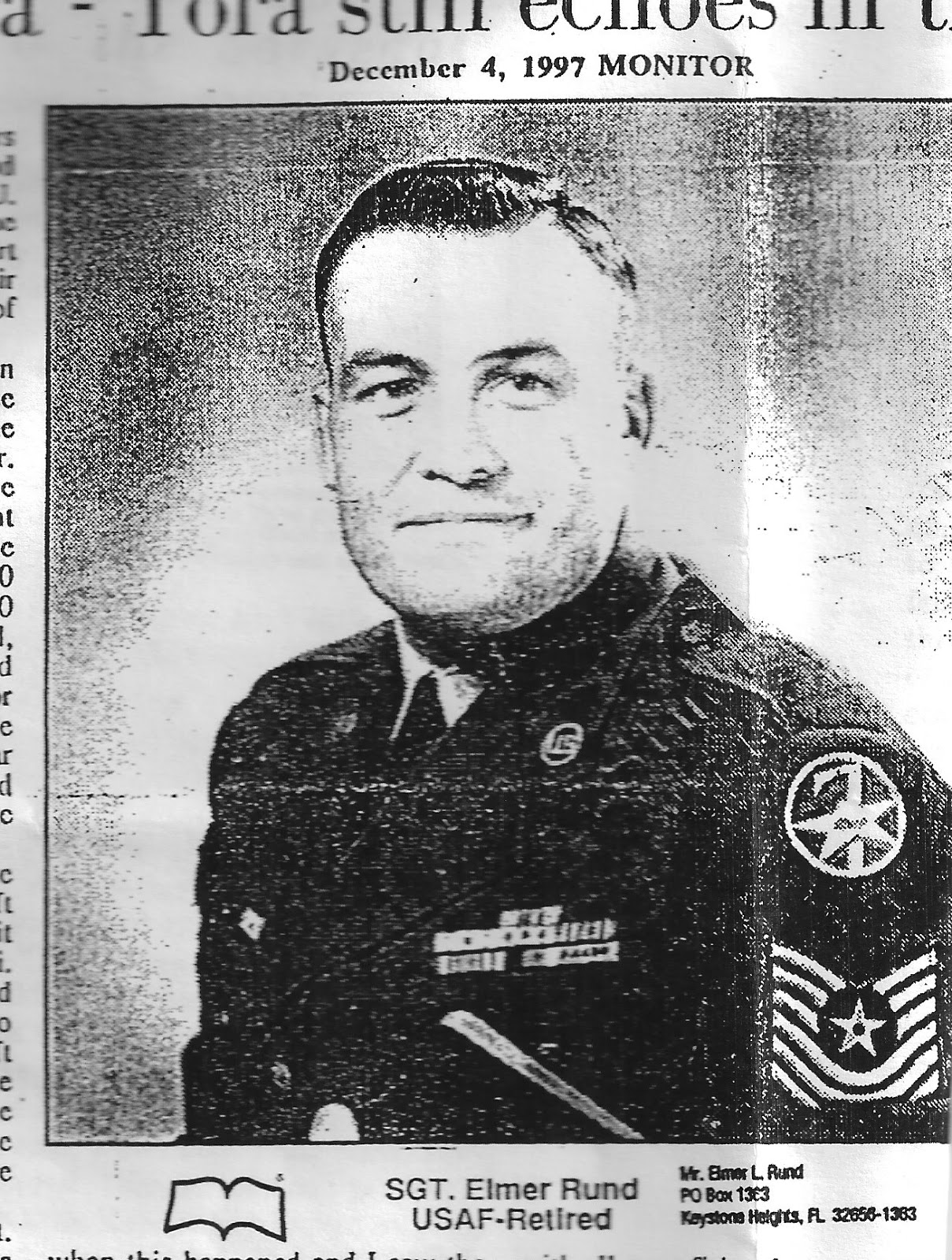
Last year, I bumped into a man at church and he shared with me the fascinating story of his father. While a soldier in the Korean War, Jonathan’s father had inadvertently helped an international organization get started! This organization, Compassion International, has touched the lives of more than 1,400,00 children worldwide through their staff, the people in the international partner churches and the children sponsors.

I asked Jonathan Rund if he’d share his father's story on my blog and he agreed. I hope this Question and Answer session with him will inspire you as much as it did me.

Q: Jonathan, thank you so much for taking the time to tell us about your father’s story. First off, what can you tell us about your dad?

A: I will happily speak of the faith of my dad, Elmer Rund.  Elmer was serving in the United States Air Force during the Korean War as an aircraft mechanic and was in constant danger.  He was almost 29 years of age when, in 1951, he was strolling through a small village called Chinae and encountered a young orphan boy of 8 or 9 years of age. The boy was begging for food.  Thankfully, our military folks would buy food for these dear orphans at that time, which my dad did that day.  However, other older boys approached asking for alcohol from Dad and he resolutely told them “no!” because he knew this was not good and he himself had had problems with alcohol.

The little orphan boy, still with him, was enthralled by dad’s action.  With all the sincerity a young boy could muster, and in broken English he asked dad “Sargie, are you a Christian?”  These five words would rock his life forever! Dad didn’t know how to respond, but the boy was waiting an answer.  Dad knew he’d been to Church at times growing up in Cary, Illinois, but didn’t know much else. As the boy waited dad falsely answered  “yes” thinking that church going was the same as being a Christian. The little boy was ecstatic! He began to jump and delight himself that he’d met another Christian. Dad wasn’t sure what had happened, he’d never seen a boy so joyful.

The remainder of that walk in the village ended with more older boys seeking alcohol. Yet, before they could get close enough to dad to request it, the little boy had run up to them and with both fists exclaimed “No, no, no…Christian!” Dad realized the boy was trying to protect him from the evil in the village. He also knew that this little guy had something to live for and he himself did not.

After this event took place, for two full months, my dad would be working on the aircraft and the Spirit of God would bring back five words to him, “Sargie, are you a Christian?”  “I told him I was,” my dad recalls.  “But am I?”  It seemed that nothing else mattered to him than the answer to that question.  But how to become a Christian?  That’s another matter altogether.

Just two month’s later Dad heard about an evangelist-missionary coming to speak to the American troops and this man was from Chicago, where Dad was from. He had heard that missionaries lived exciting lives and so he went to one of the meetings in the little Chapel. That night Rev. Everett Swanson spoke about the great white throne judgment in Revelation and how the “dead, small and great, would stand before God” and that there was a book with the names of the saints there. He asked the attendees whether their name was written in “The Lamb’s Book of Life". Under the influence and leading of the Holy Spirit, my dad realized his sin and need of a Savior and trusted completely in the work of Christ for his salvation.

He somehow discovered Rev. Everett Swanson’s concern for the orphans of the Korean conflict and knew that he needed help.  A short time later Dad felt compelled to give all of his money to the Lord’s work as an act of full obedience and discipleship to the Lord.  He had a hefty savings account at the time, enough to purchase a house, a car and possibly start a business after the war was over. Ultimately, he ended up writing six checks for $1,000 each.  He mentioned that this was one of the happiest days of his life even to the end of his life.

What Dad did not know, for over 40 years, is that one of those checks labeled “for the needy of Korea” helped to launch the ministry that is now called Compassion International.  Though they met in Chicago a short time later at a Church and may have shared a platform speaking, it is uncertain whether Rev. Swanson connected the check sent to my dad when they met!  Dad would discover this fact upon a visit to the headquarters of Compassion International many years later.           


Q: Now that we know a little bit about your dad, when did he first mention his connection to Compassion to you? Or if he didn’t, how did you find out about your dad’s involvement?

A: We grew up supporting four Korean orphan children and we knew that Compassion was the supporting organization. We also knew that Dad had come to saving faith in Christ as a result of Rev. Everett Swanson. But that was the extent of the connection.

Q: In this amazing connection of events, I have to ask what surprised you the most?

A:  I think the biggest surprise is that God kept this silent from my dad and our family, the fact that his donation had been the seed money for this organization all these years.

Q: How did knowing all this affect you and your family?

A: We’ve always been delighted to support Compassion children. I believe that all of my parents’ seven children have done so at one time or another and some are supporting quite a few orphans. Even today, my mom at 92 still supports a 12 year old boy from the Philippines!  Once we found out about his role in the start of the ministry, we just were overjoyed!

Q:  How did God use this in your life?

A: For me personally, it was a good reminder to me that any act of sincere devotion to Christ will have untold blessings for the world, though it is done in secret!  I like to tell folks that had Dad invested those $6,000 in some decent stock in the early 1950’s he could have been a multi-millionaire. But he has far more eternal riches in heaven, and over 1,400,000 children have been educated, fed, clothed and spiritually fed due to acts of obedience of this kind!  What is more valuable than a changed life?  I recently told this very story to a group of over 300 freshmen students in a local high school and what a joy to tell this story as they consider what their lives are all about.

Q:  Has Compassion shared their side of the story too?

A: The Compassion side of the story is briefly told on their website: http://www.compassion.com/about/history/1950s/default.htm. The story was also told in their 50 year celebration book called ONE, pages 5-13.

Q: What strikes you as the number one lesson God has provided through this?

A: Perhaps one of the main lessons is that Our Lord encouraged both Rev. Swanson and my dad, Elmer Rund, to consider the costs of doing something for Him and His kingdom and they both obeyed.
In hindsight, we can see that their sincere obedience to God with real world faith engendered something of incalculable value.

If you'd like to share your own extraordinary ordinary experience, please email me at soulfixer13 (at) yahoo (dot) com and we'll chat.

Wednesday, February 12, 2014

Temporarily Unavailable


2-23-14
tlc

In a joking conversation with my better half, it came up that my spouse was “temporarily unavailable.” We laughed about it but God brought up the conversation later during my devotional time.  He simply asked me how often I became temporarily unavailable- to those around me, to my church, to work, to my family and closest friends?  It was just at work that I could answer I was completely available. Why? Because that’s my job.
God didn’t have to point out that I had my priorities mixed up. I knew that the moment answered Him.  I wanted to give more reasons to explain my response– our society, time, expectations... Yet I focused on why He asked. 
Just think, God is THE ONLY ONE permanently available.  
To me that was the most important point of His question. I still stop and find myself awestruck at His availability – any time, any where. The question was asked so I would understand His essence and choose whether or not to become like Him in this.  People are His priority!

So if He asked you this question – how often do you become temporarily unavailable- how would you respond? What areas are you best at being completely available?


Saturday, December 7, 2013

Should I Stay or Should I Go?


10/9/13 

I’ve been reading through Jeremiah these past few months, using Moody’s Today in the Word’s September 2012 issue. Great bible study material! I save all the issues and pray over which one God would have me study. In the book of Jeremiah, God has gripped me with the practicalities of walking with God, something God’s own people had difficulty with in the Old Testament days.

Today I read chapters 40-44 and found myself shocked with the situation the Israelites faced at that point. The Babylonians had conquered Jerusalem and God had repeatedly spoken through Jeremiah to the people that they should stay and handle the difficulties and included the promise that He would restore them once they turned back to Him. Jonanon and the people just got up and left Jerusalem and were about to retreat to Egypt when they stopped to ask Jeremiah to seek God’s will in their travel. Jeremiah, not used to having them listen to God’s prophecy, made sure they really wanted to know and follow God’s purpose. The Israelites promised to obey whatever God’s response would be (even though He had already made this known to them previously.) When Jeremiah finally returned days later with the God’s response to stay, the people and leaders called him a liar and took him unwillingly with them towards Egypt. Really? I couldn’t believe the stupidity!

Then God spoke into my heart during my time of asking for forgiveness. Didn’t I do exactly what the Israelites had done in Jeremiah, going on my daily trip (work, errands, grandchildren…) all the while expecting Him to go where I – me, myself and I – wanted to go? Jeremiah’s story is everyone’s story – either being carried away on someone else’s headstrong journey or being headstrong myself on my own journey.  Do I even bother to ask God, before or in the midst of my journey, whether I should stay or go?

There are so many times God wants us to stay in very difficult circumstances, because He gets us through them and brings us closer to Him. I’ve been through many such situations and have stayed – through difficult times with marriage, parenting, family life and more. Often He asks me to stay, despite it all, promising that if I stay and seek Him that He will see me through it and bring me oh, so close to Him (carrying me if need be.) If only I would seek Him and His travels rather than my own Egypt-bound journey, God would be sovereign and I would follow, content and at peace knowing I was where He needed me.
by tlc